
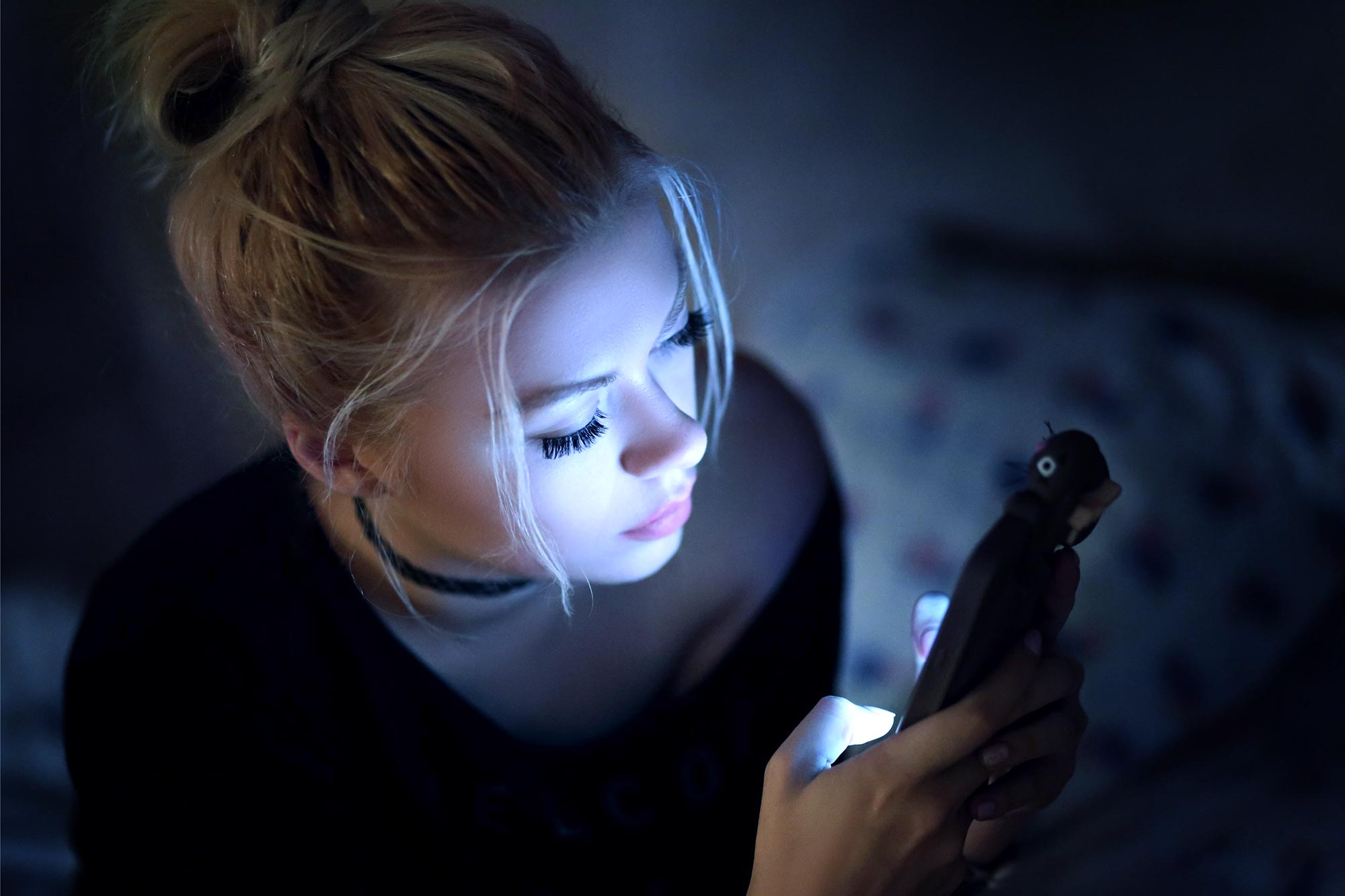
Exposure to artificial light during nighttime is linked to a higher risk of developing psychiatric disorders such as anxiety, bipolar disorder, post-traumatic stress disorder (PTSD), and tendencies toward self-harm.
The world’s largest study on the effects of light exposure on mental health, involving nearly 87,000 individuals, has revealed that heightened exposure to nighttime light elevates the risk of psychiatric conditions like anxiety, bipolar disorder, and PTSD, as well as the likelihood of self-harm. Importantly, the study also discovered that enhanced exposure to natural light during the day could serve as a non-drug approach to reducing the risk of psychosis.
Day and Night Light Exposure: A Balancing Act
In those exposed to high amounts of light at night, the risk of depression increased by 30 percent – while those who were exposed to high amounts of light during the day reduced their risk of depression by 20 percent. Similar patterns of results were seen for self-harm behavior, psychosis, bipolar disorder, Generalised Anxiety Disorder, and PTSD. These findings indicate that the simple practice of avoiding light at night and seeking brighter light during the day could be an effective, non-pharmacological means of reducing serious mental health issues.
The study, led by Associate Professor Sean Cain, from the Monash School of Psychological Sciences and the Turner Institute for Brain and Mental Health in Melbourne, Australia, is published today in the journal, Nature Mental Health.
“Our findings will have a potentially huge societal impact,” said Associate Professor Cain.
“Once people understand that their light exposure patterns have a powerful influence on their mental health, they can take some simple steps to optimize their wellbeing. It’s about getting bright light in the day and darkness at night.”
The study’s 86,772 participants were all from the UK Biobank, and were examined for their exposure to light, sleep, physical activity, and mental health. Associate Professor Cain said the impact of night light exposure was also independent of demographic, physical activity, season and employment.
“And our findings were consistent when accounting for shiftwork, sleep, urban versus rural living, and cardio-metabolic health,” he said.
Challenging Human Biology with Modern Lighting
Humans in modern, industrialized times have literally turned our biological systems upside down. According to Associate Professor Cain, our brains evolved to work best with bright light in the day and then with almost no light at night.
“Humans today challenge this biology, spending around 90 percent of the day indoors under electric lighting which is too dim during the day and too bright at night compared to natural light and dark cycles. It is confusing our bodies and making us unwell,” he said.
Reference: “Day and night light exposure are associated with psychiatric disorders: an objective light study in >85,000 people” by Angus C. Burns, Daniel P. Windred, Martin K. Rutter, Patrick Olivier, Céline Vetter, Richa Saxena, Jacqueline M. Lane, Andrew J. K. Phillips and Sean W. Cain, 9 October 2023, Nature Mental Health.
DOI: 10.1038/s44220-023-00135-8
Never miss a breakthrough: Join the SciTechDaily newsletter.
Follow us on Google and Google News.
5 Comments
Youre losing me again scitechdaily! This is why astrology is bs here under moon square mercury. Free will exists as I don’t read or listen to anti woke/woke daily wire propaganda here saying join the online culture wars and money making grift here.
Just unsubscribe then. Your comment seems only vaguely related to the article.
Association doesn’t mean causation. Research has also found that staying awake at night, which could be done admittedly with less light, correlates with two parts of the brain connecting that don’t usually, I didn’t delve deeply into that section, but that the result is less depression.
It could be that at least with depression, according to that article, staying awake at night is a coping mechanism to reduce the depression. So that the correlation might be correlating a self-medication or rather a self treatment, of staying awake at night to reduce depression, rather then it being staying awake at night being causation.
What they didn’t do is take these people and force them to change their habits and see if it was an improvement or not. It’s quite possible for instance with psychosis it would be an improvement, but with depression according to that article, it could worsen the depression.
The lifestyle changes suggested underneath the picture at the top of the page might actually be detrimental for some people.
How are we supposed to see at nighttime without lights? Psychiatry is over funded again…
“Exposure to High Amounts of Nighttime Light Increases Your Risk of Anxiety, Depression, and More”. High amounts of light can refer to the intensity or duration or the sum of both, so the title is ambiguous and may be misleading, as intense light us thought to reduce depression.